Google Ads for Small Business: A Practical Guide to Getting More Leads in 2026

Updated: Jun 24
KEY TAKEAWAYS
Google Ads allows small businesses to reach customers at the exact moment they are searching for products or services.
Successful campaigns rely on strong keyword targeting, relevant ad copy, optimized landing pages, and accurate conversion tracking.
Many small businesses start with monthly budgets between $500 and $3,000 to generate enough data for optimization.
Well-optimized campaigns often achieve conversion rates between 5% and 12%, depending on industry and search intent.
With ongoing optimization, Google Ads can become one of the most reliable channels for generating qualified leads.
Small businesses often struggle with one major challenge: getting in front of the right customers at the exact moment they are searching for a solution.
That’s where Google Ads for small business becomes one of the most powerful marketing tools available.
Instead of waiting months for SEO to build momentum, Google Ads allows your business to appear at the top of search results immediately when potential customers are actively looking for your products or services.
When implemented strategically, Google Ads can generate consistent leads, increase sales, and deliver measurable ROI for small businesses.

What Is Google Ads?
Google Ads is Google’s paid advertising platform that allows businesses to display ads across Google Search results, Google Maps, YouTube, the Display Network, and Google Shopping. If you want to understand the different Google Ads campaign types, it helps to know how each format aligns with a specific business goal.
For most small businesses, the most valuable campaign type is Search Ads, which appear when someone searches for specific keywords.
These searches typically reflect strong buying intent. Examples include:
roofing company near me
marketing agency for small business
emergency plumber near me
When someone searches these terms, ads can appear above organic search results.
Google Ads operates on a pay-per-click (PPC) model, meaning businesses only pay when someone clicks their ad.
If you're new to the platform, Google's official Google Ads guide explains the fundamentals of campaign setup and online advertising strategy.
Google determines where ads appear using an auction system based on bid amount, ad quality, and relevance. These factors combine to determine Ad Rank, which influences the position of your ad on the results page.

Why Google Ads Works So Well for Small Businesses
One of the biggest advantages of Google Ads is that it captures high-intent traffic, meaning people actively searching for a product or service.
Someone searching “emergency plumber near me” is far closer to making a purchase decision than someone casually scrolling social media.
Google Ads allows businesses to:
Reach customers at the exact moment they search
Control advertising budgets
Target specific geographic areas
Measure results in real time
Google Ads works because it reaches people at the exact moment they’re searching for a solution. But performance can vary widely depending on how campaigns are structured, optimized, and aligned with user intent. Recent Google Ads benchmarks show that while many small businesses generate consistent traffic, the biggest gap is in how efficiently that traffic converts into leads.
Because ads appear directly in search results, businesses can connect with potential customers during the decision-making phase of the buying journey, when conversion likelihood is highest. With features like keyword targeting, location targeting, and conversion tracking, Google Ads gives small businesses precise control over how their marketing budget is spent.
This makes Google Ads one of the most efficient and measurable marketing channels available.

The Key Components of a Successful Google Ads Campaign
Running Google Ads successfully requires several strategic elements working together. Each of the following topics is complex enough that we cover them in dedicated guides.
Keyword Strategy
Keywords determine when your ads appear in search results. Successful campaigns focus on high-intent search queries, meaning people actively looking for a product or service.
Examples:
landscaping services near me
landscape design company
backyard landscaping contractor
Choosing the right keywords ensures your ads reach users who are ready to take action rather than those conducting general research. Many successful campaigns focus on commercial-intent searches that indicate a user is close to making a decision.
Advertisers can also refine targeting using match types, which control how closely a search query must match a keyword, and negative keywords, which prevent ads from appearing for irrelevant searches.
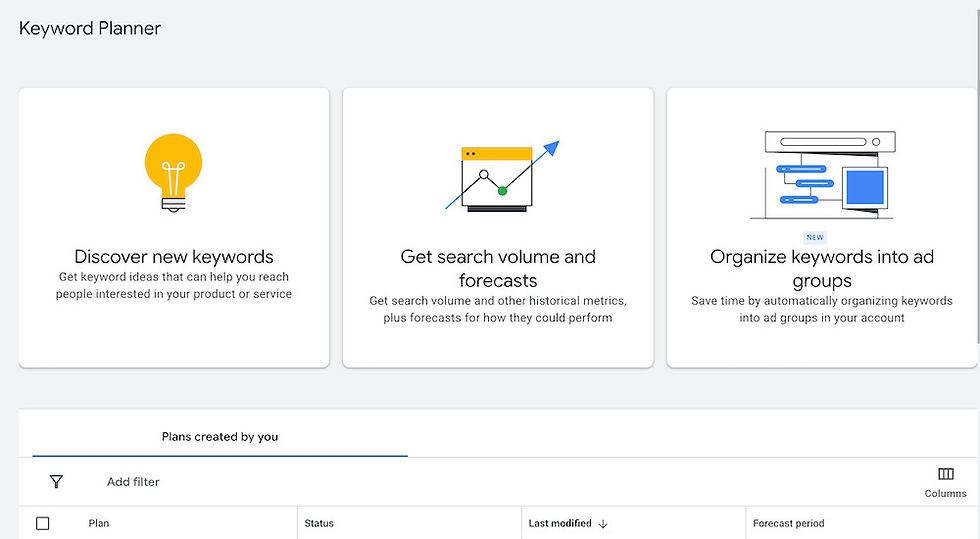
Tools like Google Ads Keyword Planner help advertisers discover keyword ideas, estimate search volume, and forecast potential costs.
High-Quality Ad Copy
Ad copy determines whether someone clicks your ad or scrolls past it. Strong ad messaging improves click-through rate (CTR) and signals to Google that your ad is relevant to the user’s search.
Effective ads typically include:
clear service offering
differentiator
strong call-to-action
Example:
Professional Landscaping Services.
Transform Your Outdoor Space. Free Consultation.
Ads that closely match the user’s search query tend to perform better because they signal relevance and intent alignment.
Google evaluates the relevance of ads and landing pages using a diagnostic metric called Quality Score, which helps determine how useful your ad experience is for searchers. Higher Quality Scores can lead to lower costs per click and better ad positions.

Optimized Landing Pages
After someone clicks your ad, they should land on a page that clearly matches their search intent. The messaging on the page should align closely with the ad they clicked, creating a seamless experience from search query to conversion.
High-converting landing pages typically include:
clear headline
focused messaging
trust signals
strong call-to-action
Landing page quality directly impacts conversion rate and campaign performance. When the ad message, keywords, and landing page content are closely aligned, users are more likely to complete an action such as submitting a form, requesting a quote, or making a purchase.
Google also evaluates landing page experience as part of Quality Score, which can influence ad rankings and cost per click.

Conversion Tracking
Conversion tracking measures important business actions such as:
form submissions
phone calls
purchases
booked consultations
These actions are typically tracked using conversion tags or analytics events that record when a user completes a valuable action after clicking an ad.
This data helps advertisers understand:
cost per lead
cost per acquisition
return on ad spend
By tracking conversions accurately, advertisers can identify which keywords, ads, and campaigns are generating real business results rather than just clicks.
Without proper tracking, campaigns cannot be optimized effectively, making it difficult to allocate advertising budgets toward the strategies that generate the highest return.

How Much Should Small Businesses Spend on Google Ads?
Budget requirements vary depending on competition, location, and industry.
However, many small businesses start with budgets between:
$500 – $3,000 per month
This typically provides enough data to:
test keywords
generate traffic
optimize campaigns
improve conversion rates
Most small businesses start with monthly budgets between $500 and $3,000 to generate enough data for optimization. Within that range, performance metrics like cost per click, conversion rate, and cost per lead can vary significantly based on industry and campaign quality, as shown in recent Google Ads benchmarks for small businesses.
If you’re unsure what budget makes sense for your business, you can use our Google Ads budget calculator to estimate spend, traffic, and potential lead volume based on your goals.
In many industries, Google Ads campaigns see average conversion rates between 5% and 12%, though this varies widely depending on landing page quality, competition, and search intent. Higher-intent local service searches often convert at higher rates than broader informational queries.
Starting with a moderate budget allows advertisers to collect enough performance data to identify which keywords, ads, and landing pages produce the most valuable leads. As campaigns become more optimized, businesses can scale budgets toward the strategies generating the strongest return.

Common Google Ads Mistakes Small Businesses Make
Many businesses conclude Google Ads doesn’t work when the issue is actually poor campaign setup or lack of optimization. Because Google Ads is a highly configurable platform, small mistakes in targeting, keyword selection, or tracking can quickly waste budget and produce misleading results.
With the right strategy and ongoing optimization, however, many of these issues can be corrected and campaigns can become a reliable source of qualified leads.
Common mistakes include:
targeting overly broad keywords
sending traffic to generic homepage pages
not using negative keywords
ignoring conversion tracking data
writing ads that don’t closely match the search intent
These issues often result in low click-through rates, wasted ad spend, and poor conversion performance. By improving keyword targeting, ad relevance, and landing page alignment, businesses can significantly improve campaign results.

Is Google Ads Worth It for Small Businesses?
When managed correctly, Google Ads can become one of the highest-ROI marketing channels available.
Benefits include:
predictable lead generation
measurable marketing performance
scalable growth opportunities
faster results than organic SEO
Because campaigns generate detailed performance data, businesses can continuously refine keywords, ads, and landing pages to improve results over time.
Businesses that combine paid search with strong landing pages and conversion tracking often see the best results.
Google also publishes detailed Google Ads best practices based on platform performance insights.

Estimate Your Potential Results
Before launching a campaign, many businesses want to understand how much traffic, leads, and revenue Google Ads could potentially generate.
Use our Google Ads ROI Calculator to estimate performance based on ad spend, conversion rates, and average customer value.
The calculator helps you project potential clicks, leads, and return on investment so you can better understand what a successful Google Ads campaign might look like for your business.
How to Get Started with Google Ads
If you’re ready to explore Google Ads, start with these steps to build a strong campaign foundation:
research high-intent keywords
build focused campaigns
write strong ad copy
create dedicated landing pages
implement conversion tracking
continuously optimize performance
Following a structured approach helps ensure that your campaigns generate qualified traffic while maintaining efficient ad spend.
If you'd prefer expert help, Metrik offers Google Ads management services designed to improve campaign efficiency, reduce wasted ad spend, and generate more qualified leads.
Building a Reliable Lead Engine with Google Ads
For small businesses looking to generate leads and grow revenue, Google Ads for small business remains one of the most effective marketing channels available.
With the right strategy, optimized landing pages, and accurate tracking, campaigns can deliver consistent traffic, qualified leads, and measurable growth.
Over time, businesses that continuously refine their keywords, ads, and landing pages often see performance improve as campaigns become more efficient and scalable.
Frequently Asked Questions About Google Ads for Small Businesses
How much does Google Ads cost for a small business?
Google Ads costs vary depending on industry competition and keyword demand. Many small businesses start with budgets between $500 and $3,000 per month, though some local service businesses may start with smaller budgets. Since Google Ads operates on a pay-per-click model, advertisers only pay when someone clicks their ad.
Is Google Ads worth it for small businesses?
Yes, Google Ads can be highly effective for small businesses because it targets users actively searching for products or services. When campaigns are properly optimized with the right keywords, landing pages, and conversion tracking, Google Ads can generate consistent leads and measurable return on investment.
How long does it take for Google Ads to work?
Google Ads can begin generating traffic almost immediately after campaigns are launched. However, it typically takes 2–6 weeks of optimization to gather enough data to improve performance, refine targeting, and reduce cost per lead.
What is a good conversion rate for Google Ads?
Conversion rates vary by industry, but many small business Google Ads campaigns see conversion rates between 5% and 15% when landing pages and targeting are optimized. Higher conversion rates are often achieved with strong offers and highly targeted keywords.
Do I need a website to run Google Ads?
Yes, most Google Ads campaigns require a website or landing page where users can learn about your services and take action. A well-designed landing page improves conversion rates and overall campaign performance.
Can small businesses manage Google Ads themselves?
Many small businesses start by managing their own Google Ads campaigns. However, because the platform is complex and constantly evolving, businesses often work with a Google Ads agency or PPC specialist to improve efficiency and maximize return on ad spend.
What types of Google Ads campaigns work best for small businesses?
For most small businesses, Google Search campaigns tend to deliver the best results because they target users actively searching for specific services or products. Other campaign types like Display, YouTube, and Performance Max can also be effective depending on marketing goals, but search campaigns typically generate the highest intent leads.
Can Google Ads work for local businesses?
Yes. Google Ads is especially effective for local service businesses such as contractors, law firms, dentists, and home services. By targeting location-based keywords like “near me” searches and restricting ads to specific geographic areas, businesses can attract highly qualified local customers.
What is the difference between Google Ads and SEO?
Google Ads is a paid advertising platform that allows businesses to appear at the top of search results immediately. SEO (search engine optimization) focuses on improving a website’s organic rankings over time through content, technical optimization, and backlinks. Many businesses use both strategies together to increase visibility and capture more search traffic.
This article is for informational purposes only and does not guarantee specific marketing results.
Comments